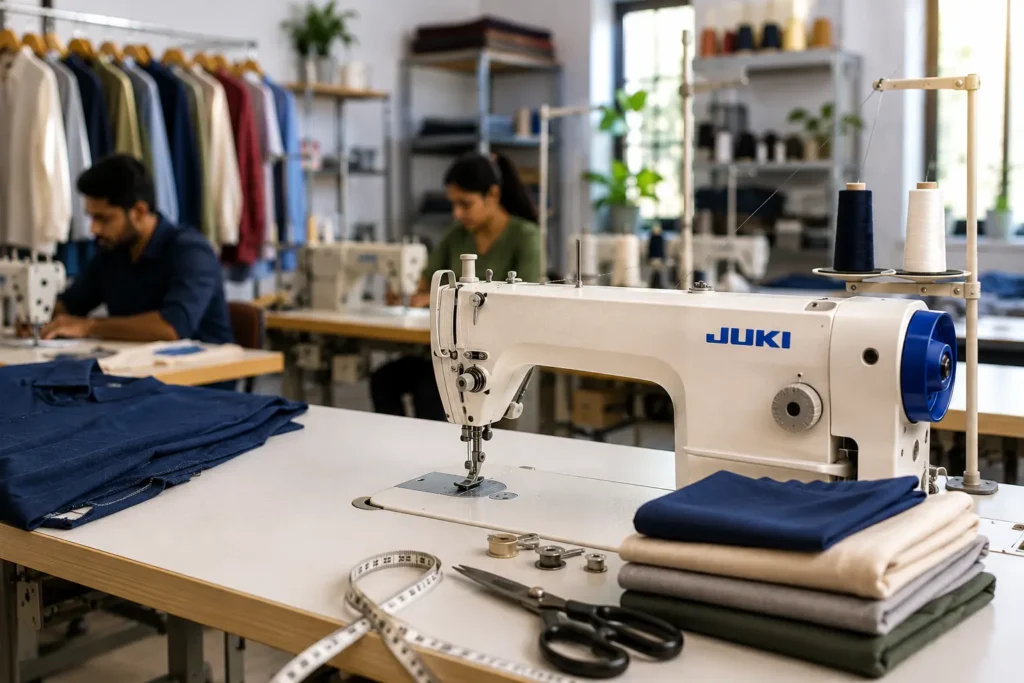
Running a small garment unit means every machine on your floor has to earn its place. Buy the wrong one, and you’re stuck with breakdowns, uneven stitches, or a bottleneck that slows down your whole line. That’s why so many unit owners, from first-time setups to established stitching businesses, keep coming back to Juki.
Here’s what you actually need to know before putting money into a Juki machine for your unit — not textbook theory, but the practical stuff that decides whether your investment pays off.
Why Juki Keeps Showing Up on Garment Floors
Walk into almost any serious garment unit in Delhi-NCR and you’ll spot at least one Juki machine. There’s a reason for that.
These machines are made to run for hours without dropping stitch quality — which matters a lot when you’ve got a bulk order due and no room for rework. Spare parts are easy to find, so a breakdown doesn’t mean days of downtime. And because Juki makes models for almost every fabric type, from thin cottons to stiff denim, you’re not forced to compromise on quality just because your product line changes.
None of this means Juki is the cheapest option out there. It usually isn’t. But for a unit that depends on daily output, the machine paying for itself over time matters more than the upfront number.
The Machines Your Unit Will Actually Use
Not every garment unit needs every type of machine. Here’s a quick breakdown of what each one does, so you can figure out what fits your production.
Lockstitch does the bulk of the work. Shirts, trousers, dresses — most of what leaves your unit will have gone through a lockstitch machine at some point. If you’re buying your first machine, start here.
Overlock takes care of edge finishing. Skip it and your seams fray, especially on knits and t-shirts. Overlock machines are usually the second purchase for any growing unit.
Interlock is built for stretch fabrics — think activewear, innerwear, anything that needs to hold its shape after being pulled and washed repeatedly. If your unit doesn’t touch knitwear, you can probably skip this one for now. If it does, interlock isn’t optional.
Zigzag handles buttonholes and decorative stitching. Not urgent when you’re starting out, but useful once your product range expands.
Heavy duty machines are for the thick stuff — denim, canvas, upholstery fabric. Try running these on a standard lockstitch machine and you’ll end up with skipped stitches and a strained motor. Worth the extra investment if that’s your product category. See the heavy duty range here.
Before You Buy — What Actually Matters
A lot of first-time buyers focus purely on price and end up regretting it six months in. Here’s what should actually be driving the decision:
Your production volume comes first. Running two shifts a day and chasing export deadlines? Don’t cut corners on motor quality just to save a few thousand rupees — that machine needs to survive constant use.
Match the machine to your fabric. This sounds obvious, but plenty of units buy a general-purpose lockstitch machine and then wonder why their knitwear seams keep tearing. Know what you’re stitching before you buy.
After-sales support is the part people forget about — until their machine breaks down mid-order and there’s no one to call. Ask your dealer upfront what their service turnaround looks like.
Genuine parts matter more than they seem to at first. A cheaper, non-genuine spare part might look identical, but it wears out fast and can quietly mess with your stitch consistency over weeks, not days — so you might not even notice the problem until it’s cost you a batch.
How Many Machines Should You Actually Start With?
For a unit just getting off the ground, a workable starting setup usually looks something like this:
- 1–2 lockstitch machines for your main stitching work
- 1 overlock machine for finishing
- 1 interlock machine, but only if stretch fabric is part of your product line
Once orders pick up, most units add a heavy-duty and a zigzag machine so they’re not turning away work that doesn’t fit their current setup.
Don't Buy Machine by Machine — Plan the Whole Line
Here’s a mistake we see often: a unit owner buys a lockstitch machine, does fine for a few months, buys another lockstitch machine when things get busy, then another. Suddenly they’ve got three lockstitch machines and zero overlock — and their finishing stage is the bottleneck no matter how fast the stitching runs.
Before you place an order, sketch out your entire process from cutting to final finish. Figure out where each machine type fits. A dealer who knows the business should be helping you plan this, not just pushing whichever unit is in stock.
Where to Buy — And Why It Matters Who You Buy From
Narula Sewing Impex has been in this business since 1956, and we’re authorised distributors for Jack, Juki, and Pegasus machines across India. For a small unit, that means:
- Machines and spare parts that are actually genuine, not grey-market stock passed off as the real thing
- Installation and technical support that doesn’t disappear after the sale
- Better pricing when you’re setting up multiple machines at once
- Honest guidance on which machine mix suits your specific production, not a one-size-fits-all pitch
Have a look at our full industrial sewing machine range, or go straight to Lockstitch, Overlock, Interlock, or Heavy Duty machines.
Talk to Us Before You Buy
Setting up or expanding a garment unit isn’t cheap, and the wrong machine mix can cost you more in downtime than it saved you upfront. If you want a second opinion on what your unit actually needs, give us a call — we’ve been doing this since 1956 and we’d rather talk you out of a bad purchase than sell you one.
📞 Call/WhatsApp: +91 81302 22677
📧 Email: narulasewingimpex@gmail.com
📍 Visit us: Plot No. 514, Phase V, Udhyog Vihar, Gurugram, Haryana – 122016
Frequently Asked Questions
Which Juki machine is best for starting a small garment unit?
A lockstitch machine — it covers the core stitching most garments need.
How many Juki machines does a small garment unit need to get started?
Usually 1–2 lockstitch, 1 overlock, and an interlock machine if you work with stretch fabric.
What is the difference between overlock and interlock Juki machines?
Overlock finishes raw edges so they don’t fray; interlock is for stretchable fabrics like knitwear.
Are Juki machines suitable for heavy fabrics like denim?
Yes, heavy-duty Juki models are built for thick fabrics like denim and canvas without straining the motor.
How do I make sure I’m buying genuine Juki machines and parts?
Buy only from an authorised distributor who can confirm the machine and parts are genuine.